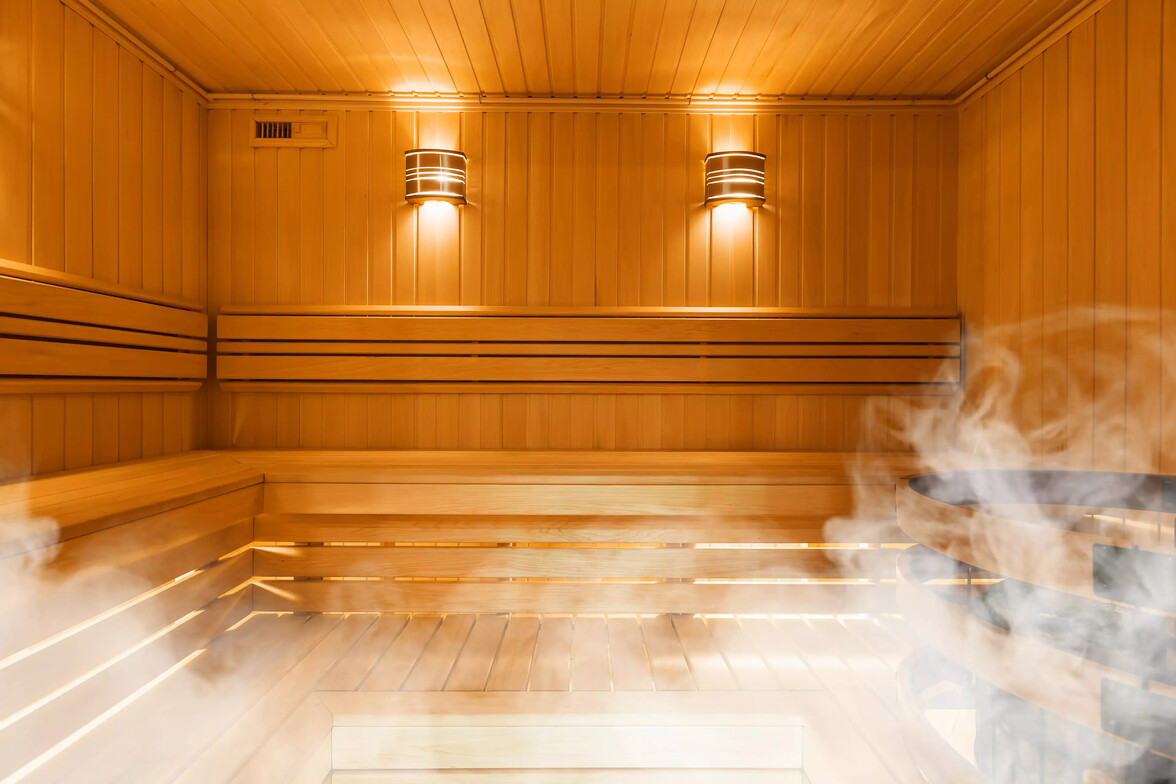
Sauna therapy has been used for centuries to relax and support overall wellness. Today, sauna use is increasingly incorporated into wellness routines for its potential cardiovascular, muscular, and stress-relieving benefits. We view sauna therapy as more than simply a way to sweat. When thoughtfully incorporated into a wellness routine, heat exposure can complement our lymphatic-focused treatments.
Schedule your sauna session here: Sauna
What Is a Sauna and How Does It Work?
A sauna is an enclosed space designed to expose the body to elevated temperatures. As the body warms, several normal physiological responses occur: heart rate increases, blood vessels dilate, blood flow changes, and the body begins to sweat.
These responses are one reason sauna use is sometimes described as creating physiological effects that resemble moderate exercise. Research suggests that regular sauna bathing may be associated with cardiovascular benefits. There are several types of saunas, including traditional and infrared.
Traditional Saunas
Traditional saunas heat the surrounding air, typically reaching temperatures of approximately 150°F to 195°F. They generally have relatively low humidity.
Infrared Saunas
Infrared saunas use infrared light to heat the body more directly rather than primarily heating the surrounding air. Because of this, they generally operate at lower temperatures, often around 110°F to 135°F.
Research into infrared sauna therapy is promising, but larger and more precise studies are still needed to determine the extent of its health benefits. [Mayo Clinic]
What Are the Potential Benefits of Sauna Therapy?
Sauna use may provide several wellness benefits when practiced safely and consistently.
Cardiovascular Support: Heat exposure causes blood vessels to widen and heart rate to increase. These cardiovascular responses are similar in some ways to the physiological response to moderate exercise.
Long-term observational research has found associations between frequent sauna use and a lower risk of cardiovascular disease and hypertension. However, these studies show an association rather than proving that sauna use alone causes these outcomes. [Laukkanen et al.; Zaccardi et al.]
Stress Reduction and Relaxation: A sauna session can provide an opportunity to slow down, disconnect, and allow the body to relax. Research suggests sauna use may help reduce stress and may contribute to improved sleep and overall feelings of well-being. [Cleveland Clinic]
Muscle Relaxation and Recovery: Heat increases blood flow and can help relax muscles and ease stiffness.
Support for Circulation: The body's response to heat includes vasodilation, or the widening of blood vessels. This increases circulation to the skin and other tissues and contributes to the characteristic feeling of warmth during a sauna session.
Sweating: Sweating is one of the body's natural methods of regulating temperature. While sauna sessions can produce significant sweating, it is important to understand that sweating should not be confused with "detoxing" or weight loss. Temporary changes on the scale after sweating primarily reflect fluid loss and should be replaced through proper hydration. [Cleveland Clinic]
Sauna and the Lymphatic System
The lymphatic system plays an important role in fluid balance and the movement of lymph throughout the body. The lymphatic system does not have a central pump like the heart. Lymph movement is influenced by muscle contractions, breathing, movement, and the activity of the lymphatic vessels themselves. This is where sauna therapy can be an interesting complement to lymphatic wellness.
Heat increases circulation, raises body temperature, and promotes sweating. These changes may support overall fluid movement and create a relaxed environment for bodywork. However, sauna use should not be considered a replacement for manual lymphatic drainage or medical treatment for lymphatic conditions.
Why Combine Sauna Therapy With Lymphatic Drainage?
Heat + relaxation: Sauna heat can help the body relax before or after hands-on treatment.
Circulation + movement: Heat causes vasodilation and increases circulation, while movement and manual techniques can support normal lymphatic flow.
A dedicated wellness ritual: Combining heat therapy, bodywork, hydration, and rest can create intentional time to slow down and care for your body.
How to Use a Sauna Safely
If you're new to sauna therapy, start slowly and allow your body to adapt.
Hydrate before and after your session: Sauna use increases fluid loss through sweating.
Start with a shorter session: Beginning with approximately 5–10 minutes can help you understand how your body responds.
Gradually increase your time: Many general sauna guidelines recommend keeping sessions around 15–20 minutes, depending on the type of sauna, temperature, and individual tolerance.
Relax and breathe normally: A sauna session should feel comfortable, not an endurance challenge.
Cool down afterward: Allow your body temperature to return to normal gradually and replace fluids.
Listen to your body: If you feel dizzy, weak, lightheaded, short of breath, or otherwise unwell, leave the sauna and cool down. There is no need to push yourself to stay in a sauna for as long as possible. More heat and more time do not necessarily mean greater benefits.
How We Integrate Sauna Therapy at Cohesive Therapy
Depending on your goals and the service you are receiving, sauna time can provide an opportunity to warm the body and create a calm transition into or out of your treatment.
Our goal is not simply to make you sweat. We focus on creating a comprehensive wellness experience that combines intentional heat, relaxation, movement, hydration, and lymphatic-focused bodywork. For clients receiving lymphatic drainage, sauna therapy may be used as a complementary wellness service rather than as a substitute for specialized lymphatic treatment.
Why We Chose SaunaRay
We’re intentional about the wellness technologies we bring into our clinic, and SaunaRay is our choice for infrared sauna therapy. SaunaRay uses ceramic infrared heating elements to create a gentler, more comfortable heat experience than a traditional high-temperature sauna. The lower-temperature environment encourages sweating while letting you breathe comfortably and relax, making the experience feel less intense and more restorative.
What sets SaunaRay apart is its focus on quality, craftsmanship, and thoughtful design. Each sauna is handcrafted in Collingwood, Ontario, using natural materials, and SaunaRay emphasizes low-EMF infrared technology, toxin-conscious construction, ergonomic design, and quality heating elements. The result is a sauna experience that fits naturally into a wellness-focused setting, giving our clients a comfortable space to slow down, relax, sweat, and make sauna therapy part of their overall self-care routine.
Sauna Safety & Contraindications
Sauna use is not appropriate for everyone. One of the primary risks is dehydration, which can contribute to symptoms such as thirst, headache, muscle cramps, weakness, dizziness, and confusion. [Cleveland Clinic]
You should speak with your healthcare provider before using a sauna if you are pregnant, have a cardiovascular condition, have high or low blood pressure, take medications that may affect your response to heat, or have another medical condition that could make heat exposure unsafe.
Sauna use should also be avoided after consuming alcohol. If you have recently experienced a heart attack or stroke, consult your healthcare provider before considering sauna use. [Cleveland Clinic]
Your safety always comes first.
Add Sauna Therapy to Your Wellness Routine
Looking for a simple way to add more relaxation and heat therapy to your self-care routine?
Schedule your sauna session here: Sauna
Cohesive Therapy offers sauna packages that can be purchased individually or added as an upgrade to existing treatment packages.
Whether you want to enjoy sauna therapy on its own or incorporate it into a broader lymphatic wellness routine, our team can help you determine how sauna time may fit into your visits. Ready to add sauna therapy to your next visit? Contact us to learn more about our sauna packages and available upgrades.
Works Cited
Cleveland Clinic. “Get Your Sweat On: The Benefits of a Sauna.” Cleveland Clinic, 12 Aug. 2024, https://health.clevelandclinic.org/sauna-benefits.
Laukkanen, Jari A., et al. “Cardiovascular and Other Health Benefits of Sauna Bathing: A Review of the Evidence.” Mayo Clinic Proceedings, vol. 93, no. 8, 2018, pp. 1111–1121. https://pubmed.ncbi.nlm.nih.gov/30077204/.
Mayo Clinic Staff. “Do Infrared Saunas Have Any Health Benefits?” Mayo Clinic, 13 Sept. 2024. https://www.mayoclinic.org/healthy-lifestyle/consumer-health/expert-answers/infrared-sauna/faq-20057954.
Thompson, Belinda, et al. “Manual Lymphatic Drainage Treatment for Lymphedema: A Systematic Review of the Literature.” Journal of Cancer Survivorship, vol. 15, no. 2, 2021, pp. 244–258. https://pubmed.ncbi.nlm.nih.gov/32803533/.
Zaccardi, Francesco, et al. “Sauna Bathing and Incident Hypertension: A Prospective Cohort Study.” American Journal of Hypertension, vol. 30, no. 11, 2017, pp. 1120–1125. https://pubmed.ncbi.nlm.nih.gov/28633297/.
Gepina Caterina
Contact Me
.jpg)
